Commercial Flat Roofing Contractor in Maryland, DC & Virginia
TPO, EPDM, and PVC membrane systems for commercial properties across the DMV, installed to meet DC energy codes and specified for the Mid-Atlantic climate.

Is Your Commercial Flat Roof Becoming a Liability?
Commercial flat roof failures build quietly. By the time they’re visible inside the building, the cost of repair has typically multiplied several times over what an earlier intervention would have required.
Recurring leaks that keep coming back after repairs? Recurring leaks on a flat roof are almost never isolated failures. They signal a system problem, deteriorated seams, failed flashing, compromised membrane around penetrations, or drainage failures that force water to find its own path. Patch repairs on a failing system extend the liability without solving it.
Ponding water that stays on the roof more than 48 hours? Sustained ponding voids most membrane manufacturer warranties at the 48-hour mark and accelerates seam fatigue, UV degradation, and membrane delamination. It indicates a drainage design failure or structural deflection, not just a clogged drain.
Facility manager inheriting an aging roof with no condition documentation? An aging commercial roof without a documented inspection history is an unquantified capital liability. Without infrared moisture data and a written condition assessment, you’re making budget decisions without the information needed to make them correctly.
Seeing membrane shrinkage, surface cracking, or open seams on inspection? These are late-stage failure indicators on EPDM and modified bitumen systems. At this point the question isn’t whether replacement is needed, it’s how long you can defer it before the interior damage multiplies the project cost.
GET STARTED
Commercial Flat Roofing Systems for Maryland, DC & Northern Virginia
At Insured Exteriors, we install the three primary commercial roofing membranes used across the DMV, along with restoration systems for roofs that don’t yet require full replacement. Each system is selected based on building use, energy code requirements, and long-term performance expectations.
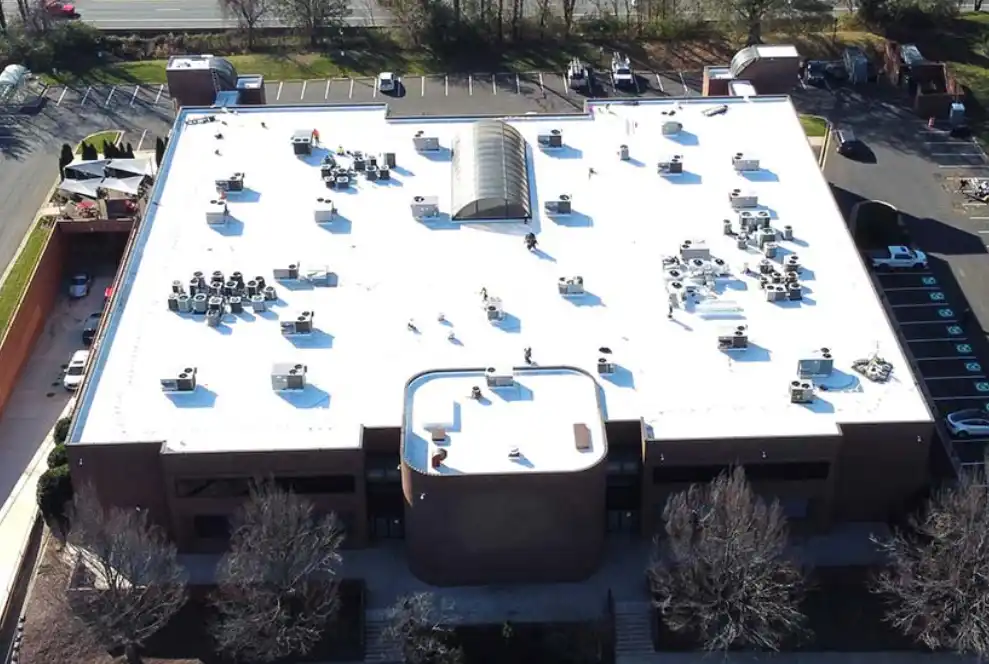
TPO Roofing
The most widely used flat roofing membrane for commercial buildings. TPO offers high solar reflectivity, helping meet DC energy code requirements while reducing heat gain. Heat-welded seams create strong, watertight bonds designed to withstand wind uplift and long-term exposure.
EPDM Roofing
A proven membrane with a long performance history in Mid-Atlantic climates. EPDM remains flexible through extreme temperatures and freeze-thaw cycles, making it a reliable option for buildings prioritizing durability and long-term performance.
PVC Roofing
The preferred membrane for buildings exposed to grease, chemicals, or industrial exhaust. PVC resists degradation from oils and fats while using heat-welded seams similar to TPO for superior waterproofing.
Fluid-Applied Roof Restoration
When an existing roof is structurally sound, a silicone or acrylic coating system can restore waterproofing and extend the roof’s lifespan without a full tear-off. Moisture testing is required to confirm the system is suitable.
GET STARTED
Compliance & Roof Condition Assessment
Commercial flat roof replacement in DC isn’t just a maintenance decision, it must meet energy code requirements and verified roof conditions before a system can be specified correctly.
Energy Code & SRI Requirement
DC’s Energy Conservation Code requires low-slope commercial roofs to achieve a minimum 3-year-aged Solar Reflectance Index (SRI) of 64. High-reflectivity membranes such as white TPO easily meet this threshold, while standard black membranes do not. Installing a non-compliant system can trigger costly retrofits during future inspections.
BEPS Considerations
Washington DC’s Building Energy Performance Standards (BEPS) apply to privately owned buildings over 10,000 sq ft. Roof replacements affect compliance through insulation R-value and membrane reflectivity, both of which influence building energy performance.
Roof Conditions Diagnostics
Before recommending replacement or restoration, we verify the roof’s condition through:
- Infrared moisture scanning to detect wet insulation
- Membrane and seam inspection to identify failure points
- Drainage evaluation to confirm proper water flow
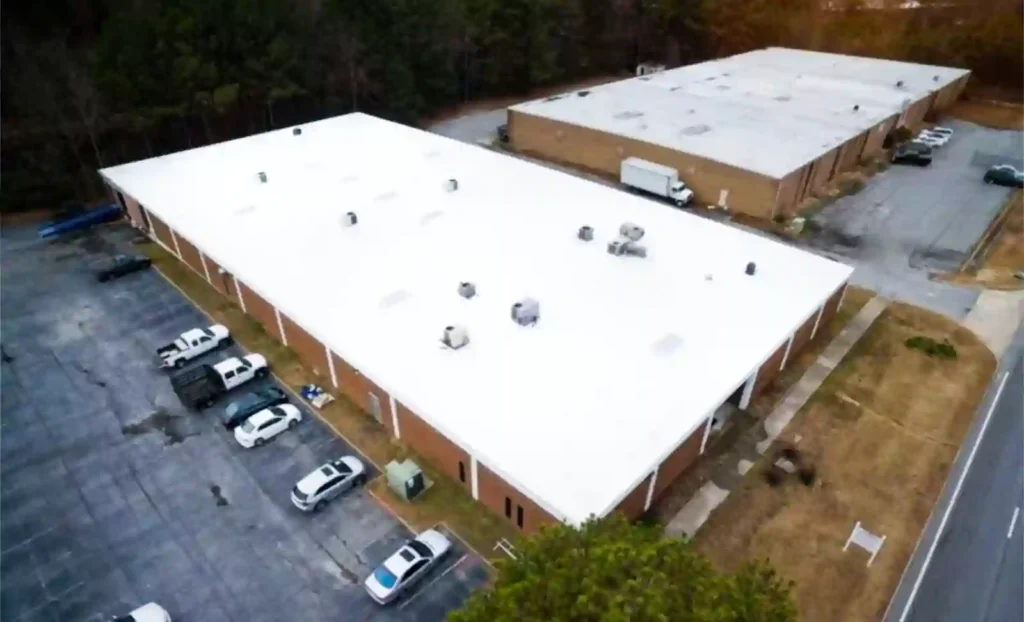
BUILT FOR THE DMV
Built for DMV Climate Conditions
Commercial flat roofs in the DMV must perform under wind events, seasonal temperature swings, and dense rooftop equipment loads. Our installation specifications account for these regional conditions so the roof system performs reliably over its full service life.
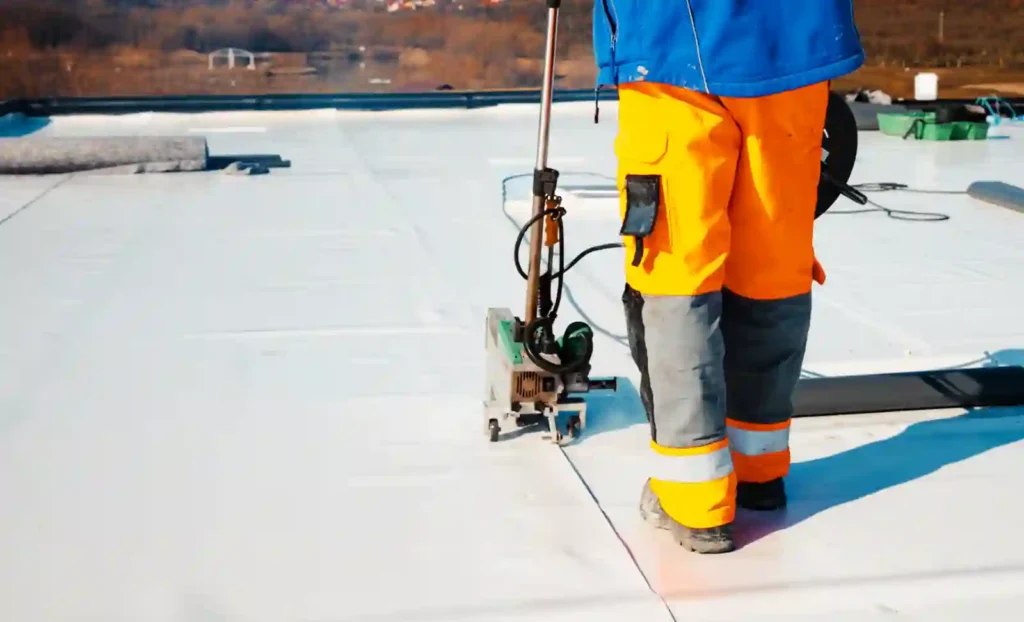
Wind-resistant attachment
Fastener patterns and attachment systems are designed to meet the wind uplift requirements for each building and exposure zone.
Seam technology for freeze–thaw cycles
Membrane systems are selected with seam durability in mind to handle the DMV’s winter temperature fluctuations.
High-reflectivity membranes
Reflective roofing materials reduce rooftop surface temperatures, improving membrane longevity and supporting building energy performance.
Drainage-first installation
Proper slope and drainage design are verified before installation to prevent ponding and protect the roof assembly.
Equipment and penetration detailing
All rooftop equipment curbs, penetrations, and flashing details are treated as critical waterproofing points during installation.
HOW IT WORKS
Our Commercial Flat Roofing Process
A structured process ensures every commercial roof installation is properly assessed, specified, and installed to manufacturer and code requirements.
Free Roof Inspection
We inspect the roof, document conditions, and provide a written report with recommendations.
System Specification
The membrane, insulation, and installation method are specified for your building. Proposals are fully itemized.
Code & Compliance
We verify SRI, insulation, and applicable energy code requirements before finalizing the system.
Manufacturer Notification
For NDL systems, the manufacturer is notified and inspection is scheduled before installation.
Professional Installation
Factory-trained crews install the full roofing assembly to manufacturer specifications.
SERVICE AREA
Serving Commercial Properties Across Maryland, Washington DC & Northern Virginia
We install commercial flat roofing systems throughout the DMV:
MARYLAND
- Montgomery County
- Prince George's County
- Howard County
- Anne Arundel County
- Carroll County
WASHINGTON D.C.
- Washington D.C.
- Georgetown
- Capitol Hill
VIRGINIA
- Fairfax County
- Arlington
- Alexandria
- Loudoun County
- Prince William County
Building types we regularly serve: office buildings, retail centers, multifamily residential, mixed-use developments, warehouse and industrial facilities, houses of worship, schools, and institutional properties.
FAQS
Commercial Flat Roofing: Frequently Asked Questions
What is the difference between TPO, EPDM, and PVC for commercial flat roofing?
TPO is heat-welded, highly reflective, and the right standard specification for most DMV commercial buildings, particularly those subject to DC energy code SRI requirements. EPDM is adhesive-bonded, proven across 30+ years in the Northeast climate, and the best cold-weather flexibility option, but standard black EPDM requires a reflective coating for SRI compliance. PVC is mandatory for buildings with restaurant exhaust, grease exposure, or industrial chemical discharge, nothing else provides equivalent chemical resistance. Seam technology matters more than membrane material for long-term leak prevention, heat-welded TPO and PVC seams consistently outperform adhesive-bonded EPDM seams over a 20+ year horizon.
How does DC's SRI requirement affect membrane selection?
DC’s Energy Conservation Code requires low-slope commercial roofs to achieve a minimum 3-year-aged SRI of 64. Standard white TPO achieves approximately 100. Standard black EPDM achieves 0. Installing a non-compliant membrane on a DC commercial building means failing energy inspections and facing a costly coating retrofit, a problem that can be avoided entirely at the time of installation by specifying the correct membrane. We provide SRI documentation for every DC commercial installation.
When does roof restoration make more sense than replacement?
DC surface temperatures in dense neighborhoods regularly run 8–10°F higher than reported air temperatures. Unshaded asphalt roofs in these areas reach 120–150°F on summer afternoons. That heat load accelerates binder breakdown, granule loss, and brittleness, effectively shortening the roof’s practical lifespan. For homes in the District and inner-ring suburbs, we recommend solar-reflective shingles and verified attic ventilation balance as standard specifications, not optional upgrades.
How long does commercial flat roof installation take?
Project duration depends on building size, membrane system, insulation depth, number of penetrations, and access constraints. A standard 5,000–10,000 square foot building typically takes three to seven days for a complete system installation. Urban DC projects with limited staging areas, elevator access requirements, or historic district permit reviews can extend timelines significantly. We provide a specific project schedule in writing before work begins, not a range that shifts after contract execution.
GET STARTED
Schedule Your Free Commercial Flat Roof Assessment
Whether you’re managing a recurring leak, planning a capital replacement, evaluating BEPS exposure, or inheriting a building with an undocumented roof condition, a professional assessment gives you the documented information you need to make the right decision.
Licensed & insured roofing contractor serving Maryland, DC & Northern Virginia