Commercial Roofing Contractor in Maryland, DC & Virginia
Flat and metal roofing systems for property managers, building owners, and commercial stakeholders.
Installed to meet code, protect your asset, and minimize operational disruption.
Is Your Commercial Roof Becoming a Liability?
Commercial roof failures rarely announce themselves. They build through seam degradation, undetected moisture intrusion, and drainage issues, until they become expensive operational problems.
Recurring leaks disrupting tenants or operations? Recurring leaks are almost never isolated incidents. They signal a system failure, deteriorated seams, failed flashing, or drainage issues, that temporary patches don’t resolve. Every temporary fix extends the liability.
Ponding water that doesn’t drain within 48 hours? Standing water accelerates membrane deterioration, increases structural load, and voids most manufacturer warranties. It’s a drainage or structural issue, not a cosmetic one.
Suspected moisture damage inside the insulation layer? Saturated insulation dramatically reduces thermal performance, raising energy costs, without producing visible interior leaks. By the time it shows up as a leak, the insulation has often been compromised for months.
No clear maintenance or replacement plan for an aging roof? An aging commercial roof without a documented condition assessment is an unquantified liability on your balance sheet. A professional inspection gives you a clear picture and a defensible decision framework.
If any of this describes your situation, a free commercial roof inspection gives you clarity without obligation.
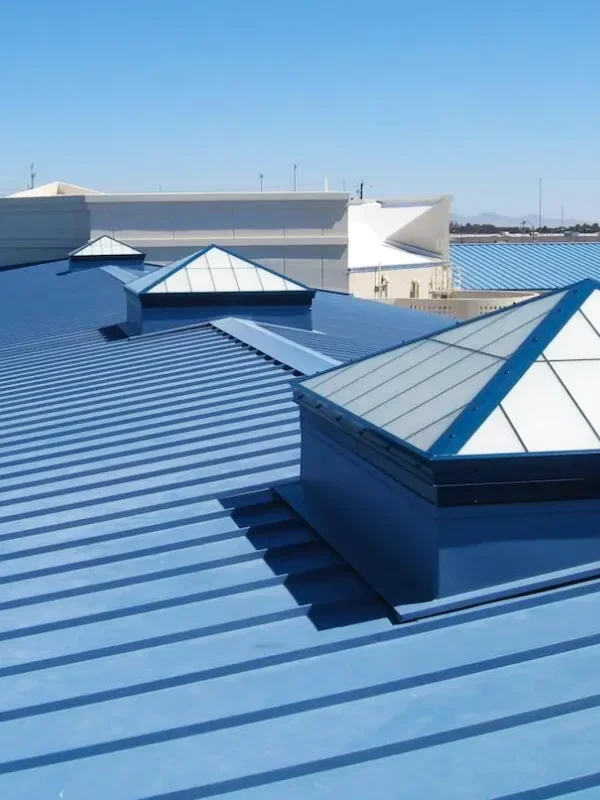
THE PERFECT SOLUTION
Commercial Roofing Services in Maryland, DC & Northern Virginia
Commercial roofing is about building envelope performance. The roof membrane, insulation assembly, drainage system, flashing details, and penetration seals all function as a single integrated system. When one component fails, the rest follows.
At Insured Exteriors, we work with property managers, building owners, facility directors, and commercial stakeholders to deliver roofing systems that meet structural demands, regulatory requirements, and long-term asset goals. We evaluate drainage, insulation integrity, membrane condition, and system performance as a whole, not just the surface.
Most commercial roof failures we encounter are system failures caused by poor original installation, overlooked drainage issues, or deferred maintenance, not material failures. We address root causes.
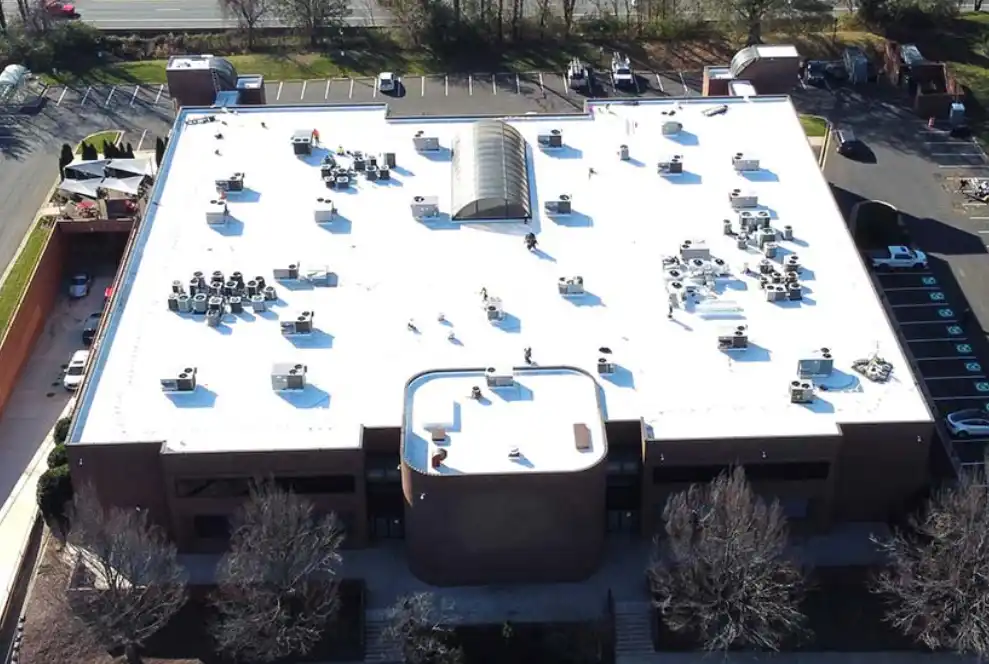
Commercial Roof Replacement
When systems reach the end of their lifecycle, we install complete roofing assemblies designed for durability, energy compliance, and long-term performance. Every replacement includes a full drainage assessment, insulation specification, and membrane selection matched to your building’s use and exposure.
Commercial Roof Repair & Leak Detection
Targeted diagnosis and resolution of leaks, membrane punctures, seam failures, and flashing deterioration. We identify root causes so repairs hold.
Preventative Maintenance & Roof Asset Management
Scheduled inspections, condition tracking, and proactive repairs that extend roof lifespan and reduce unexpected capital expenditure. The most cost-effective commercial roofing decision most property managers never make.
Storm & Emergency Response
Rapid response for wind, hail, and impact damage to minimize operational disruption and interior damage. We document damage thoroughly for insurance purposes.
Building Envelope Coordination
Roof failures often originate from adjacent components, parapet walls, through-wall flashing, or coping failures. We evaluate the full building envelope to ensure long-term protection, not just the membrane surface.
GET STARTED
Commercial Roofing Systems Built for the DMV
We focus on the two primary commercial roofing systems most suited to DMV building types and climate conditions. System selection depends on building use, drainage requirements, sun exposure, and energy performance goals.
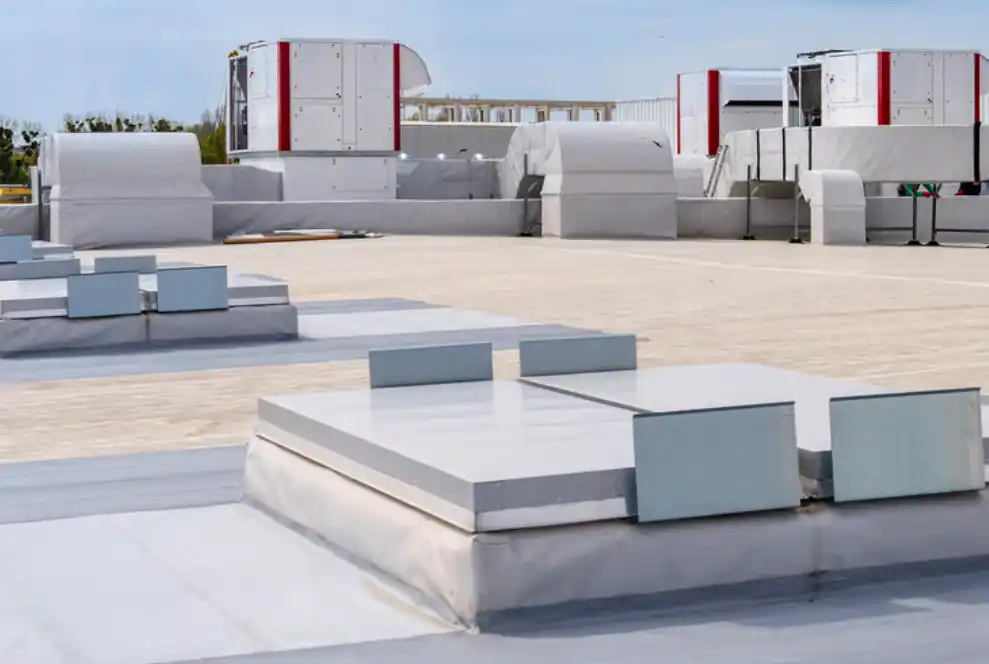
Flat Roofing
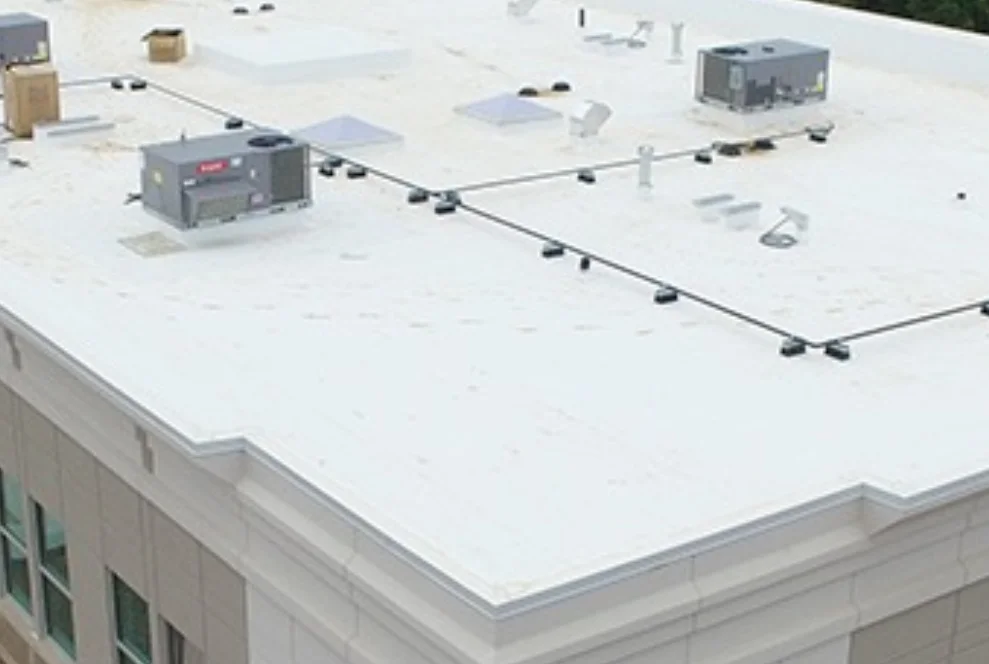
The standard system for most commercial buildings in the DMV, retail centers, office buildings, multifamily properties, and mixed-use developments. We install three primary membrane types, each suited to different performance requirements. With proper maintenance, they last 20 to 30 years.
TPO (Thermoplastic Polyolefin), EPDM (Ethylene Propylene Diene Monomer) & PVC (Polyvinyl Chloride).
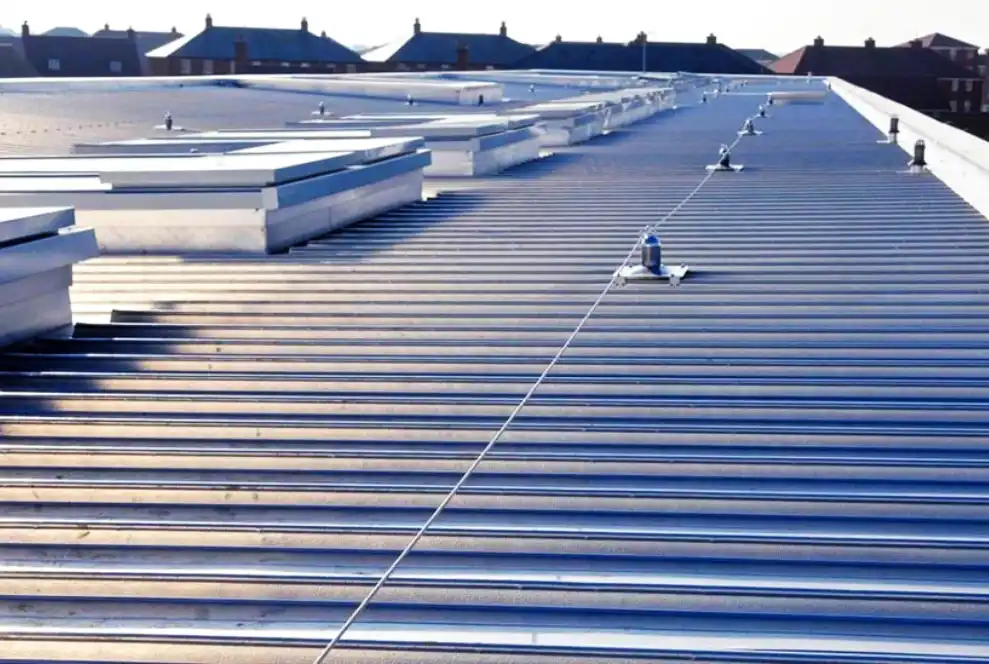
Metal Roofing
Standing seam metal systems for commercial and industrial buildings requiring superior wind resistance, long-term durability, and minimal maintenance. Concealed fasteners eliminate the primary leak point of exposed-fastener systems. Reflective coating options reduce heat absorption and contribute to energy performance targets.
Best suited for industrial facilities, steep-slope commercial buildings, and properties where lifecycle cost matters more than upfront cost.
WHERE COMMERCIAL ROOFS FAIL
The Most Common Failure Points We Find on DMV Commercial Properties
Understanding where commercial roofs fail is the first step to preventing costly damage. These are the issues we find most frequently on commercial inspections across Maryland, DC, and Northern Virginia.
We identify and document all of these failure points during our commercial inspections, providing photos, written condition reports, and prioritized recommendations in every step of the process.
Seam and flashing failures
The most common source of commercial roof leaks. Heat-welded seams on single-ply membranes can delaminate over time. Flashing at parapet walls, penetrations, and drains deteriorates faster than the field membrane and is frequently overlooked during routine maintenance.
HVAC and rooftop foot traffic damage
Every service call to rooftop HVAC equipment creates puncture and abrasion risk. Unprotected membrane around equipment curbs, pipe penetrations, and conduit runs is consistently where we find hidden damage on older roofs.
Hidden moisture in the insulation assembly
Water that infiltrates through micro-failures in the membrane saturates the insulation layer below. Wet insulation loses most of its R-value, raises energy costs, and adds structural load without producing interior leaks until the saturation reaches the deck. Infrared scanning is the only reliable way to detect this without destructive testing.
Parapet wall and coping failures
Parapet walls are part of the building envelope, not just the roof. Failed coping caps, deteriorated through-wall flashing, and cracked masonry at parapet walls allow water to bypass the roof membrane entirely and enter the building from the side.
HOW IT WORKS
Simple Process. No Surprises.
We install all major roofing systems and we’ll tell you honestly which one makes the most sense for your home, your climate, and your budget.
Commercial Roof Inspection
Detailed evaluation of membrane condition, seam integrity, drainage performance, insulation, flashing, penetrations, and parapet walls.
System Diagnosis
We identify root causes, not just visible symptoms. If your roof is leaking at a drain, we assess whether it's a membrane failure, or a structural problem.
Scope Development
A written, itemized scope of work with system specifications, material choices, and timeline. You know exactly what's being done, and why.
Professional Installation
We review energy codes for DC and larger Maryland buildings to ensure compliance, then our commercial crews deliver system-level installation.
Final Walkthrough
Written warranty documentation, as-built photos, and guidance on maintenance schedules and compliance planning after installation.
SERVICE AREA
Serving Homeowners Across Maryland, Washington DC & Northern Virginia
We serve commercial clients throughout the DMV, including:
MARYLAND
- Montgomery County
- Prince George's County
- Howard County
- Anne Arundel County
- Carroll County
WASHINGTON D.C.
- Washington D.C.
- Georgetown
- Capitol Hill
VIRGINIA
- Fairfax County
- Arlington
- Alexandria
- Loudoun County
- Prince William County
Building types we regularly serve: Office buildings, retail centers, multifamily residential, mixed-use developments, HOAs, industrial and warehouse facilities, houses of worship, and institutional properties.
FAQS
Commercial Roofing: Frequently Asked Questions
How do I know if my commercial roof needs replacement or repair?
The decision comes down to three factors: membrane age, moisture saturation extent, and repair cost versus replacement cost ratio. As a general rule, if your roof is within five years of its expected lifespan and repair costs are approaching 25–30% of replacement cost, replacement is usually the better financial decision. If the roof is mid-lifecycle with isolated failures, targeted repair is the right call. An infrared scan during inspection is often the most reliable way to assess moisture extent before committing to either path.
What is ponding water and why is it a serious problem?
Ponding water is standing water that remains on a flat roof surface more than 48 hours after rainfall. Beyond that threshold, most membrane manufacturer warranties are voided. Sustained ponding accelerates UV degradation, increases membrane fatigue at seams, adds structural load to the deck, and creates ideal conditions for biological growth that breaks down the membrane surface. It almost always indicates a drainage design failure or structural deflection, not just a clogged drain.
How does roofing affect DC's BEPS compliance?
In some cases, yes. Roof coatings and restoration systems can extend membrane life by 10–15 years when the existing membrane is structurally sound, seams are intact, and moisture saturation is below roughly 25% of the total roof area. The key is an accurate moisture assessment (typically through infrared scanning) before committing to restoration. If moisture saturation is extensive, restoration accelerates the eventual failure rather than delaying it.
Can a commercial roof be restored instead of replaced?
In some cases, yes. Roof coatings and restoration systems can extend membrane life by 10–15 years when the existing membrane is structurally sound, seams are intact, and moisture saturation is below roughly 25% of the total roof area. The key is an accurate moisture assessment, typically through infrared scanning, before committing to restoration. If moisture saturation is extensive, restoration accelerates the eventual failure rather than delaying it.
How do you minimize disruption to tenants and building operations during a commercial roofing project?
Phased scheduling, coordinated access planning, and crew sequencing allow most commercial roofing work to proceed with minimal impact on building operations. For occupied retail and multifamily properties, we schedule noise-intensive work during low-occupancy hours where possible and communicate timelines clearly to building management. Membrane installation is typically the least disruptive phase, tear-off and deck work are the highest-impact periods, and we plan those sequences accordingly.
GET STARTED
Schedule Your Free Commercial Roof Inspection
Get a clear, documented assessment of your roof’s condition, failure risks, and options.
Whether you’re managing a recurring leak, planning a capital replacement, or trying to understand your BEPS exposure, a professional inspection is the right starting point.
Licensed & insured roofing contractor serving Maryland, DC & Northern Virginia