Residential Roofing Repair Contractor in Maryland, DC & Northern Virginia
Leak diagnosis, storm damage repair, and emergency response for homes throughout the DMV. The residential roofing repair contractor DMV homeowners call when the problem keeps coming back.

Leaking Roof? Here's Why the Last Repair Didn't Hold.
Most homeowners who reach out to us for residential roofing repair have already had someone try to fix it. The patch held for a season, then the leak came back. Here’s what they’re usually dealing with.
Seeing a water stain on your ceiling but can’t find where it’s coming from? The leak showing up inside your home is almost never directly below the damage on the roof. Water enters at one point and travels along decking, rafters, or wall cavities before it appears inside. Chasing the stain without tracing the actual entry point is why most residential roofing repairs fail the first time.
Missing or lifted shingles after a storm? Wind damage in the DMV doesn’t always look dramatic from the ground. Shingles lifted at the corners or along a ridge line are losing their seal bond, and once that bond breaks, water gets under the mat during the next rain.
Noticing dark streaks, moss, or soft spots on your roof surface? They’re signs of active material degradation that residential roofing repair needs to address before it spreads.
Getting leaks every winter around the same spots? Ice damming is the most common cause of recurring winter leaks in DMV residential roofing. It forms when heat escaping through the attic melts roof snow, which then refreezes at the cold eave overhang and backs water under the shingles.
Dealing with a leak around your chimney, skylight, or pipe boot? Flashing failures are behind the majority of localized residential roofing repair calls in this region. Mortar-set chimney flashing cracks from freeze-thaw cycling, pipe boot gaskets dry out in summer heat, and skylight frames shift from thermal movement.
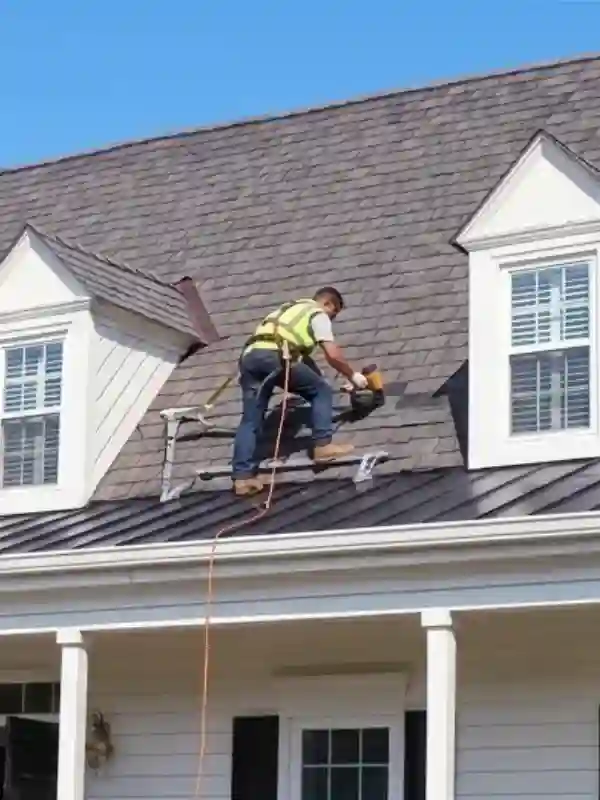
RESIDENTIAL ROOFING REPAIR
Residential Roofing Repair in Maryland, DC & Northern Virginia
Residential roofing repair in the DMV requires more than patching the obvious damage. The region’s freeze-thaw cycles, storm patterns, humidity levels, and urban heat load create failure points that a surface-level fix won’t hold against. A repair done correctly identifies the actual entry point, addresses the underlying cause, and restores the system, not just the symptom.
At Insured Exteriors, we diagnose before we repair. Every residential roofing repair inspection includes identifying the actual water entry point, evaluating deck condition and flashing integrity at every transition, and giving you an honest assessment of whether repair or replacement is the better answer for your specific situation.
Leak Diagnosis and Repair
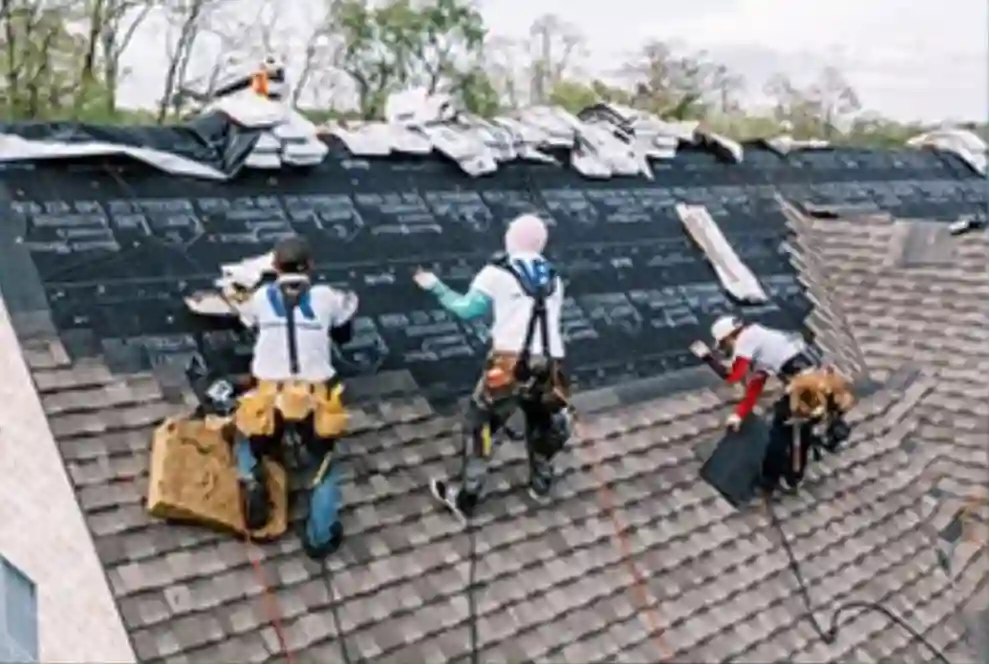
We trace the actual water entry point before any repair work begins. That means examining flashings, transitions, decking, and penetrations, not just the surface, and completing the residential roofing repair at the source of the failure.
Storm Damage Repair
Wind and hail damage in the DMV ranges from obvious blow-offs to subtle bruising that won’t cause a leak for months. We document all damage, complete the residential roofing repair work, and provide full documentation for insurance claims.
Flashing Repair and Replacement
Chimney flashing, pipe boots, skylight frames, valley flashing, and wall transitions are the most common failure points on DMV roofs. We repair or replace flashing with compatible materials and seal every transition for thermal movement.
Ice Dam and Winter Leak Repair
Ice dams form when attic heat melts roof snow that refreezes at the eave. We address the roof entry point and evaluate the attic insulation and ventilation conditions driving the problem. A surface patch alone won’t stop it from coming back.
Emergency Roof Repair
When a storm damages your roof and water is getting in, we respond quickly, tarp and secure the affected area, and schedule permanent residential roofing repair as soon as conditions allow. We serve Maryland, DC, and Northern Virginia.
GET STARTED TODAY
Common Residential Roofing Repair Problems We Fix in the DMV
Every residential roofing repair situation is different, but certain failure patterns show up consistently across the region.
Here’s what we see most often and how we approach each one.
Missing or Blown-Off Shingles
Wind events in the DMV regularly exceed 60 mph, and shingles without six-fastener patterns are the first to go. We replace missing shingles with closely matched material, inspect surrounding courses for lifted tabs and broken seal bonds, and re-nail the field to current wind resistance standards.
Flashing Failures at Chimneys and Penetrations
Chimney flashing is the most commonly misdiagnosed leak source on DMV homes. Freeze-thaw cycling cracks mortar-set step flashing, counterflashing lifts from the masonry, and water runs behind the whole assembly. We re-set or replace it with proper step and counterflashing sequencing using copper or compatible metal.
Pipe Boot and Vent Flashing Failures
EPDM boot gaskets degrade from UV exposure and heat, typically failing between years 10 and 15. We replace failed boots and check surrounding shingles for moisture damage from slow leaks that went unnoticed.
Ice Damming and Eave Leaks
Ice dams are an attic performance problem, not just a roofing problem. We repair eave damage, verify ice-and-water shield coverage, and assess attic insulation and ventilation to address the cause.
Roof Deck Rot and Soft Spots
Slow leaks and poor ventilation cause wood rot that won’t show up until you step on it. We remove affected shingles, replace the rotted decking, and reinstall with proper underlayment before the surface goes back down.
REPAIR WORK BUILT FOR THIS REGION
Why Residential Roofing Repair in the DMV Is Different
Residential roofing repair in the Mid-Atlantic requires understanding the specific failure mechanisms this climate creates. If your contractor is patching symptoms without diagnosing causes, the repair won’t last.
The water entry point is almost never where the leak appears
In attached rowhouses, split-levels, and homes with complex rooflines, water travels significant distances between where it enters and where it shows up inside. We trace every residential roofing repair to its actual source before any work begins. A patch placed at the wrong location won’t stop the water.
Freeze-thaw cycling creates failures that summer inspections miss
Flashing sealants crack in winter cold, mortar joints open and close with temperature swings, and ice dams force water under shingles at the eave. A roof inspected in July may show no sign of the failure that causes a leak every January. We evaluate residential roofing conditions with the full seasonal cycle in mind.
Storm damage isn’t always visible from the ground
Hail bruises shingle mats in ways that don’t cause an immediate leak but accelerate granule loss and surface degradation over the following 12 to 24 months. Wind lifts tabs and breaks seal bonds that look fine until the next rain. We inspect at roof level, not just from the street.
Historic districts and HOA requirements apply to repairs too
In Georgetown, Capitol Hill, Old Town Alexandria, and Annapolis, even a residential roofing repair that changes the visible material may require board approval. We know which jurisdictions require permits for repair work and handle the documentation so you don’t have to.
Repair vs. replace is a real decision that deserves an honest answer
If a residential roofing repair costs more than 30% of replacement value, or if the deck is compromised across multiple areas, replacement is usually the better investment. We’ll tell you which situation you’re in after the inspection, not after the repair is done.
HOW IT WORKS
Our Residential Roofing Repair Process
Residential roofing repair done correctly starts with diagnosis, not a ladder and a caulk gun.
Every step depends on the one before it.
Roof Repair Inspection
We inspect the entry point, deck condition, and flashing before we recommend a single thing.
Material Recommendation
We give you an honest answer on whether repair or full replacement is the better investment for your roof.
Clear Scope of Work
You get a fully itemized proposal covering what gets repaired, what materials are used, and what it costs.
Slate Roofing Installation
Every repair is completed at the source of the failure with compatible materials and every transition sealed.
Final Walkthrough
We walk the repaired area with you, answer any questions, and hand over documentation of all work completed.
SERVICE AREA
Serving Homeowners Throughout the Maryland, Washington DC & Northern Virginia Region
Insured Exteriors handles residential roofing repair throughout the DMV, including historic districts with specific material and permitting requirements.
MARYLAND
- Montgomery County
- Prince George's County
- Howard County
- Anne Arundel County
- Carroll County
WASHINGTON D.C.
- Washington D.C.
- Georgetown
- Capitol Hill
VIRGINIA
- Fairfax County
- Arlington
- Alexandria
- Loudoun County
- Prince William County
We’re familiar with Historic Preservation Review Board requirements in Georgetown and Capitol Hill, HOA-approved materials in major communities throughout the region, and DC Energy Conservation Code compliance for any roofing repair projects across the district.
FAQS
Residential Roofing Repair: Frequently Asked Questions
How do I know if I need residential roofing repair or a full replacement?
A roof under 15 years old with localized damage is almost always a residential roofing repair candidate. A roof over 20 years old with widespread granule loss, curling, multiple leak points, or compromised decking is usually better served by replacement. We give you that answer after the inspection, not a sales pitch.
Does homeowner's insurance cover residential roofing repair in the DMV?
Storm damage from wind and hail is typically covered under standard homeowner’s policies in Maryland and Virginia. Maintenance-related deterioration is not. We document all damage thoroughly and can provide the inspection report and photos your adjuster will need.
Why does my roof keep leaking in the same spot after residential roofing repair?
Because the repair addressed the symptom, not the source. In most recurring leak situations, water is entering at a flashing transition, a deteriorated penetration, or a parapet wall and traveling to where it shows up inside. We trace the entry point before any residential roofing repair work begins.
How long does residential roofing repair take?
Most single-location repairs are completed in a few hours. Multi-area repairs or anything involving deck replacement takes longer. We’ll give you an accurate time estimate before work starts and schedule around your availability.
Can residential roofing repair be done in winter in Maryland or Virginia?
Yes, with the right materials and conditions. Certain adhesives and sealants require minimum temperatures to cure properly, so we assess conditions before scheduling cold-weather work. Emergency situations get addressed regardless of season. We serve Maryland, DC, and Northern Virginia year-round.
YOUR ROOF WON'T FIX ITSELF. THE INSPECTION IS FREE.
Get a Free Residential Roofing Repair Inspection
Residential roofing repair in the DMV is too important to hand off to the wrong contractor. The difference between a repair that holds and one that fails in the next rain comes down almost entirely to whether the actual source was found and fixed.
No pressure. We inspect your roof, walk you through what we found, and give you a straight answer on whether repair or replacement is the right call for your home and your budget.
Licensed & insured roofing contractor serving Maryland, DC & Northern Virginia